


Fuel Management Systems Qatar | NLSE Qatar
- Ishfar Tarannum
- Jul 17
- 7 min read

Fuel Management Systems in Qatar
Efficient fuel storage and distribution are essential for construction companies, transport fleets, factories, generator facilities, fuel stations, and other industrial operations. A professionally designed fuel management system helps a business store, transfer, dispense, and manage fuel more safely and efficiently.
Businesses searching for dependable fuel management systems in Qatar need more than a standard fuel tank. They need a complete solution designed around their fuel capacity, operating environment, safety requirements, available space, and daily consumption.
New Line Steel Engineering, commonly known as NLSE Qatar, supports industrial and commercial projects with fuel tanks, piping work, fuel station construction, mechanical works, installation, and maintenance services. The company was established in Qatar in 1996 and operates from the Industrial Area in Doha.
What Is a Fuel Management System?
A fuel management system is a combination of equipment and processes used to control how fuel is stored, transferred, dispensed, and monitored.
Depending on the project, a complete system may include:
Above-ground or underground fuel storage tanks
Fuel transfer pumps
Fuel pipelines and fittings
Dispensing equipment
Level indicators and monitoring devices
Valves and control components
Tank supports and protective structures
Electrical and plumbing connections
Leak-control and containment arrangements
Inspection and maintenance access
The exact system should be planned according to the type of fuel, required storage capacity, site layout, frequency of use, and operational needs.
Why Businesses in Qatar Need Reliable Fuel Management Systems
Fuel is a critical operating resource for many businesses in Qatar. Construction equipment, generators, industrial machinery, commercial vehicles, and production facilities may depend on an uninterrupted fuel supply.
Poorly planned fuel storage can lead to operational delays, inaccurate fuel handling, equipment downtime, difficult maintenance, and unnecessary safety concerns.
A properly designed system can make fuel operations easier to control by providing:
More Organized Fuel Storage
A dedicated storage and distribution setup keeps fuel-related equipment in one controlled area. This makes daily operation, inspection, refilling, and maintenance more manageable.
Efficient Fuel Transfer
Correctly designed pipelines, pumps, valves, and connections help fuel move between tanks and equipment without unnecessary complications.
Better Control Over Fuel Use
Level indicators, dispensing controls, and optional monitoring equipment can help operators understand how much fuel is available and how it is being used.
Reduced Operational Disruption
When tanks, pipelines, and dispensing components are properly selected and installed, businesses can reduce the risk of avoidable breakdowns and interruptions.
Easier Maintenance
A well-planned layout gives technicians better access to pumps, pipes, valves, tanks, and other components that may require inspection or servicing.
Types of Fuel Storage Tanks Used in Qatar
Fuel tanks are among the most important parts of a fuel management system. Tank selection should be based on the fuel type, storage capacity, installation location, site conditions, and project specifications.
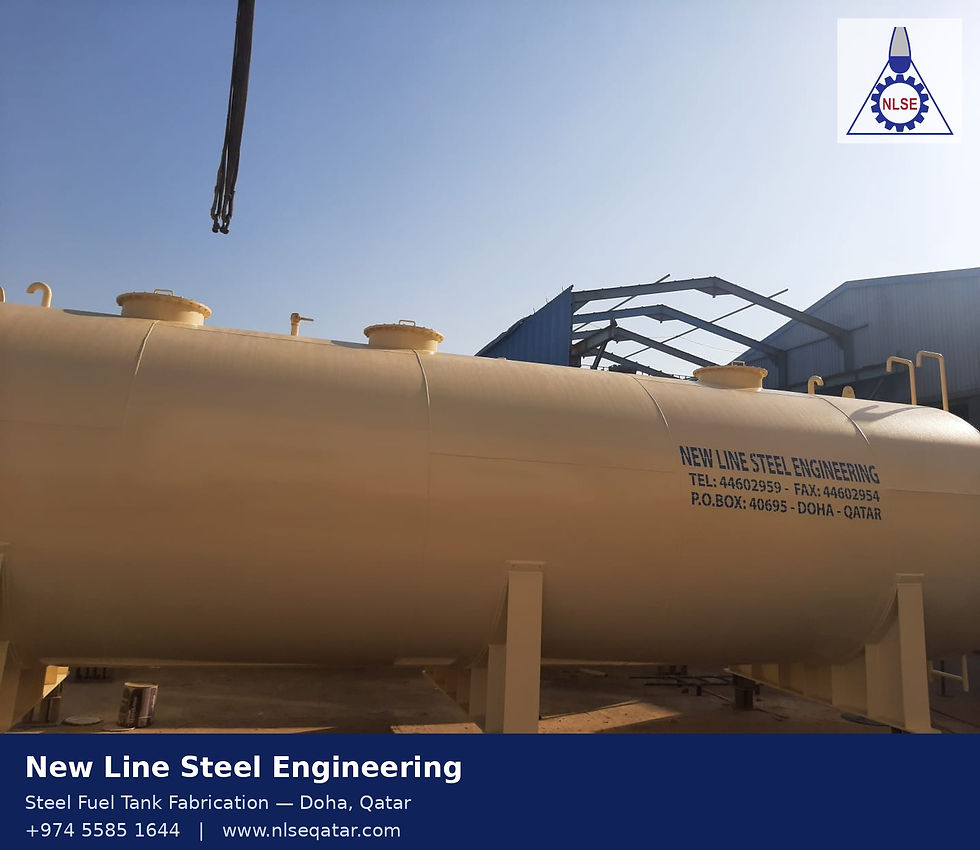
NLSE Qatar provides fabrication and engineering support for different types of fuel storage tanks, including above-ground tanks, underground tanks, vehicle-mounted tanks, and double-wall GRP-coated fuel storage tanks.
Above-Ground Fuel Storage Tanks
Above-ground tanks are installed on a prepared foundation or support structure. They are generally easier to access for inspection, cleaning, repair, and maintenance.
These tanks may be suitable for:
Industrial facilities
Construction sites
Generator fuel storage
Workshops
Fleet yards
Temporary project locations
The tank capacity, wall thickness, supports, connections, and protective features should be selected according to the intended application.
Underground Fuel Storage Tanks
Underground tanks can be useful where ground-level space is limited or where the project requires a less visible storage arrangement.
Installing an underground tank requires careful planning for excavation, structural support, access points, pipeline routing, protection, and future maintenance.
NLSE Qatar lists underground fuel tank manufacturing and fuel pipeline installation among its fuel station and mechanical service capabilities.
Double-Wall Fuel Tanks
A double-wall tank uses an additional protective layer around the primary fuel-containing section. This design may be selected when a project requires an extra containment arrangement.
The suitability of a double-wall system depends on the site, fuel type, installation method, and project requirements.
Vehicle-Mounted Fuel Tanks
Some operations need fuel to be transported between sites or delivered directly to equipment. A properly fabricated vehicle-mounted tank can support mobile refuelling requirements for construction, industrial, and fleet operations.
Its design should consider capacity, vehicle load, mounting method, access, stability, and dispensing requirements.
Key Components of a Fuel Management System
A reliable system is not created by the tank alone. Every component needs to work together.
Fuel Tanks
The tank stores the required fuel volume. It should be designed with suitable materials, dimensions, openings, connections, and support arrangements.
Fuel Pipelines
Pipelines connect the storage tank with pumps, dispensers, generators, machinery, or other equipment. The pipe layout must support safe access and efficient fuel movement.
Pumps and Transfer Equipment
Fuel pumps move fuel from one point to another. Pump capacity should match the required flow rate, operating distance, fuel type, and application.
Valves and Fittings
Valves help operators control, isolate, or stop fuel flow. Correct fittings are also important for creating reliable connections between pipes, tanks, pumps, and dispensing equipment.
Level Monitoring
Fuel-level indicators allow operators to check the amount of fuel remaining in a tank. Depending on the project, monitoring may be manual, mechanical, electrical, or digitally connected.
Dispensing Equipment
Dispensers control how fuel is delivered to vehicles, equipment, generators, or machinery. A commercial system may also include access control or transaction-recording features where required.
Containment and Protection
Fuel installations may require protective barriers, tank supports, access platforms, drainage planning, or containment structures depending on the site design.
Fuel Station Construction in Qatar
Fuel station construction involves several coordinated disciplines. Tank installation must work together with mechanical systems, electrical connections, plumbing, pipelines, dispensing points, and site structures.
NLSE Qatar states that it undertakes fuel station mechanical, electrical, and plumbing work, as well as underground tank manufacturing, pipeline installation, fuel station construction, and operation and maintenance services.
A fuel station project may involve:
Reviewing the site and operational requirements
Determining the required fuel capacity
Planning the tank location
Designing the pipeline route
Fabricating or supplying required components
Completing mechanical and structural work
Coordinating electrical and plumbing connections
Installing pumps and dispensing components
Inspecting and testing the completed system
Planning future maintenance access
Each project should be evaluated individually rather than relying on a one-size-fits-all system.
Industries That Use Fuel Management Systems in Qatar
Fuel management systems can support a wide range of industries and operations.
Construction Companies
Construction sites may require fuel for excavators, cranes, loaders, generators, trucks, and other heavy equipment. An on-site fuel system can simplify refuelling and reduce delays.
Transportation and Logistics
Fleet operators need an organized way to store and dispense fuel to commercial vehicles. A centralized system can make daily refuelling more controlled.
Manufacturing Facilities
Factories may use fuel for machinery, heating processes, standby generators, or other industrial operations.
Ready-Mix and Concrete Plants
Concrete plants operate heavy machinery, mixers, loaders, trucks, and generators that may require a dependable fuel supply.
Oil and Gas Support Operations
Workshops, service yards, and project sites supporting the oil and gas sector may need customized storage tanks, steel structures, and fuel transfer arrangements.
Generator Facilities
Commercial buildings, industrial facilities, hospitals, warehouses, and other properties may require fuel storage for standby generators.
Fuel Stations
Retail and private fuel stations require coordinated storage, piping, dispensing, mechanical, electrical, and maintenance solutions.
How to Choose a Fuel Management System Provider in Qatar
Choosing the right provider is important because fuel system projects involve fabrication, installation, piping, mechanical work, documentation, and long-term maintenance.
Consider the following factors before selecting a contractor.
Relevant Project Capabilities
Look for a provider that understands tanks, piping, fabrication, structural work, mechanical systems, and installation rather than handling only one component.
Customized Engineering
The provider should evaluate the project’s capacity, available space, intended use, and operating conditions before recommending a solution.
Fabrication Quality
Tank and structural fabrication require accurate cutting, welding, forming, measurement, and quality-control procedures.
Installation Support
A good provider should be able to coordinate tank placement, pipelines, fittings, mechanical work, and related site requirements.
Documentation
Industrial clients may require drawings, project documentation, inspection records, and controlled procedures.
Maintenance Availability
Fuel tanks, pipelines, pumps, valves, and dispensing components need periodic inspection. Selecting a company that also provides operation and maintenance support can make future servicing easier.
Why Consider NLSE Qatar?
New Line Steel Engineering combines steel fabrication experience with mechanical and fuel infrastructure capabilities.
Its services include:
Fuel station construction
Underground fuel tank manufacturing
Above-ground fuel storage tanks
Double-wall GRP-coated fuel tanks
Vehicle-mounted fuel tanks
Fuel pipeline installation
Steel fabrication
Mechanical works
Electrical and plumbing work for fuel station projects
Piping work
Operation and maintenance
NLSE Qatar also works with mild steel and stainless steel fabrication and employs engineers, supervisors, welders, fitters, and fabricators for industrial projects.
Start Your Fuel Management Project in Qatar
Every fuel storage or distribution project has different requirements. Tank capacity, fuel type, dispensing method, installation location, pipeline distance, and maintenance needs should all be reviewed before fabrication or installation begins.
For customized fuel management systems in Qatar, speak with New Line Steel Engineering about your site, required capacity, intended use, and project timeline.
Contact New Line Steel Engineering
Address:Al Karajat Street, Street No. 30, Gate No. 85, Zone No. 57, P.O. Box 40695, Industrial Area, Doha, Qatar
Phone:+974 55851644
Email:shakif@nlseqatar.cominfo@nlseqatar.com
Opening Hours:Saturday–Thursday8:00 a.m.–5:00 p.m.
CTA: Request a consultation for your fuel tank, fuel station, pipeline, or fuel management system project in Qatar.
Frequently Asked Questions
What is a fuel management system?
A fuel management system controls how fuel is stored, transferred, dispensed, and monitored. It may include tanks, pumps, pipelines, valves, dispensers, level indicators, and control equipment.
Who provides fuel management systems in Qatar?
NLSE Qatar provides fuel-related engineering services, including fuel tank fabrication, pipeline installation, fuel station construction, mechanical work, and operation and maintenance.
Does NLSE manufacture underground fuel tanks in Qatar?
Yes. Underground fuel tank manufacturing is listed among NLSE Qatar’s fuel station and engineering services.
Can a fuel system be customized for an industrial site?
Yes. Tank capacity, pipeline layout, dispensing points, installation method, and other components can be planned according to the site and operational requirements.
Does NLSE provide fuel station construction in Doha?
Yes. NLSE Qatar lists fuel station construction, mechanical, electrical, plumbing, pipeline installation, and maintenance among its services.
Where is NLSE Qatar located?
NLSE Qatar is located on Al Karajat Street, Street No. 30, Gate No. 85, Zone No. 57, Industrial Area, Doha, Qatar.



Comments