


Fleet Fuel Management System Qatar | NLSE Qatar
- Ishfar Tarannum
- Jul 18
- 10 min read

Fleet Fuel Management System in Qatar
Managing fuel efficiently is a major responsibility for businesses operating commercial vehicles, trucks, buses, construction machinery, delivery vans, and heavy equipment. Without an organized refuelling process, companies may experience delays, poor fuel visibility, inconsistent dispensing, higher operating costs, and unnecessary vehicle downtime.
A professionally planned fleet fuel management system in Qatar can help businesses create a safer and more organized process for storing, transferring, and dispensing fuel at their own facility.
New Line Steel Engineering, also known as NLSE Qatar, supports commercial and industrial projects with fuel storage tanks, underground tank manufacturing, pipeline installation, fuel station works, steel fabrication, and related mechanical services. The company operates from the Industrial Area in Doha, Qatar.
What Is a Fleet Fuel Management System?
A fleet fuel management system is an on-site infrastructure designed to store and dispense fuel for company-owned vehicles and equipment.
Depending on the project requirements, the system may include:
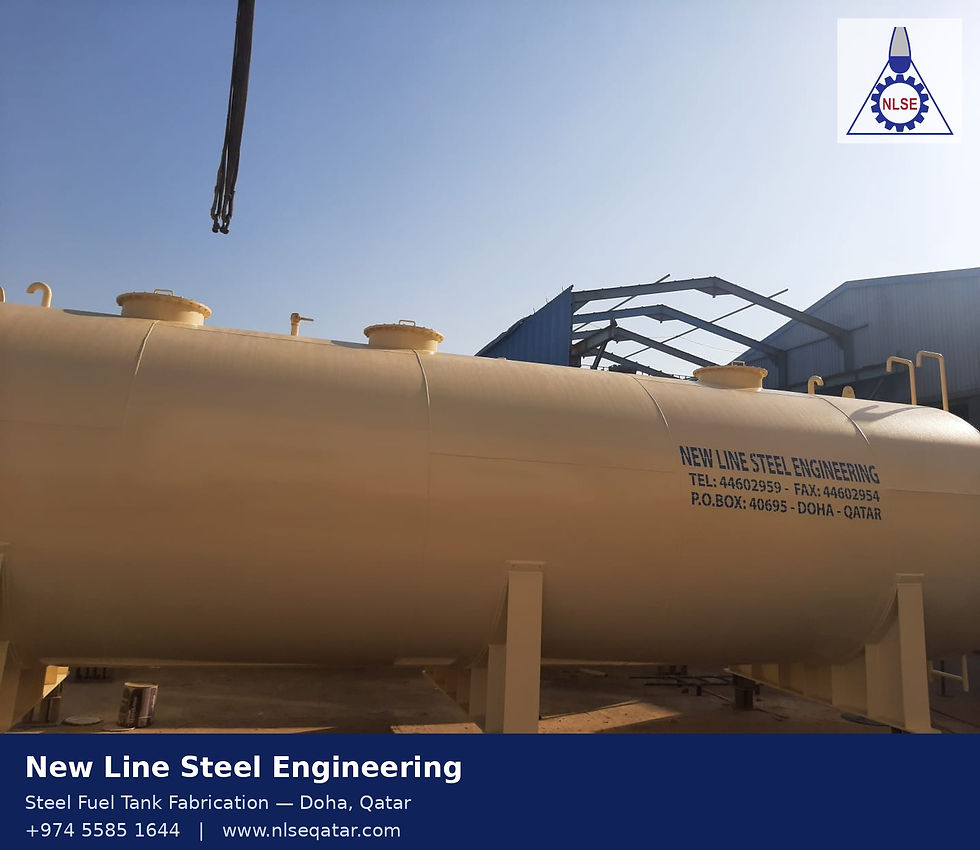
Above-ground or underground fuel storage tanks
Fuel transfer pumps
Fuel dispensers
Fuel pipelines and fittings
Isolation and control valves
Tank-level indicators
Fuel-metering equipment
Electrical and plumbing connections
Protective barriers and containment structures
Vehicle access and refuelling areas
Inspection and maintenance access points
Some projects may also include digital monitoring, driver identification, transaction recording, or fuel-consumption reporting. These features should be selected separately according to the company’s operational and reporting requirements.
The system must be designed around the size of the fleet, daily fuel consumption, available space, vehicle type, required storage capacity, and frequency of refuelling.
Why Fleet Operators in Qatar Need Better Fuel Control
Fleet-based businesses depend on vehicles to complete daily operations. A delay in refuelling can affect deliveries, construction work, employee transport, customer service, and project schedules.
Using public fuel stations may be suitable for small fleets. However, businesses operating many vehicles may benefit from having a dedicated fuel storage and dispensing system at their yard, workshop, warehouse, or project site.
Faster Vehicle Refuelling
An on-site fleet fuel system allows drivers and equipment operators to refuel at the company’s facility.
Vehicles do not need to travel to an outside fuel station before beginning work. This can help reduce unnecessary travel and waiting time.
Better Operational Planning
A centralized fuel storage system makes it easier to plan fuel deliveries and maintain an appropriate fuel supply.
Fleet managers can schedule replenishment based on expected use rather than waiting until the available fuel reaches a critical level.
More Organized Fuel Dispensing
A properly designed dispensing area helps create a consistent refuelling process.
Vehicles can follow an organized entry, refuelling, and exit route, reducing congestion around the fuel station.
Reduced Vehicle Downtime
When fuel is available at the operating facility, vehicles can return to work more quickly.
This is especially valuable for construction companies, logistics businesses, ready-mix operators, and industrial fleets that use vehicles throughout the day.
Improved Fuel Visibility
Tank-level indicators and suitable metering equipment can help managers understand how much fuel is stored and how much is being dispensed.
Additional monitoring technology may be included when the business requires detailed fuel-use records.
Who Can Use a Fleet Fuel Management System?
Fleet fuel systems can support many types of commercial and industrial operations in Qatar.
Transport and Logistics Companies
Logistics businesses may operate trucks, trailers, vans, and support vehicles from one or more distribution centres.
An on-site refuelling system can help these businesses prepare vehicles before daily routes and manage fuel availability from a central location.
Construction Companies
Construction fleets may include excavators, loaders, cranes, dump trucks, pickup trucks, generators, and other equipment.
A fuel management system installed at a construction yard or temporary project site can support regular refuelling without sending every vehicle to a public station.
Ready-Mix and Concrete Companies
Ready-mix businesses depend on mixer trucks, loaders, pumps, and other heavy equipment.
Since these vehicles often operate according to strict delivery schedules, reliable fuel access is important for maintaining productivity.
NLSE Qatar’s gallery highlights products and engineering work for cement, ready-mix, concrete, concrete block factories, petrol stations, and industrial facilities.
Bus and Passenger Transport Operators
Bus companies and employee transportation providers may need to refuel several vehicles within a limited period.
A properly planned system can include multiple vehicle access points or dispensing arrangements based on the number and size of vehicles.
Waste-Management Fleets
Waste-collection trucks usually operate on fixed schedules and cannot afford lengthy refuelling delays.
A centralized fleet fuel station can help prepare vehicles before they begin their assigned routes.
Delivery and Distribution Companies
Companies operating local delivery vans may need an efficient refuelling process at their warehouse or distribution centre.
An on-site system can allow drivers to refuel before or after completing their routes.
Industrial and Oilfield Support Fleets
Industrial yards and oilfield support businesses may operate trucks, forklifts, mobile equipment, generators, and service vehicles.
These businesses often require customized tank sizes, pipeline arrangements, and dispensing points based on their working environment.
Main Components of a Fleet Fuel Management System
A fleet fuel system consists of several connected components. Each part should be selected and installed according to the project’s operational needs.
1. Fuel Storage Tank
The storage tank holds the required fuel supply.
Tank selection may depend on:
Daily and monthly fuel consumption
Number of vehicles
Fuel delivery frequency
Available installation space
Above-ground or underground placement
Site and operational requirements
Future fleet growth
Installing a tank that is too small may require frequent fuel deliveries. A tank that is unnecessarily large may increase the project’s cost and space requirements.
A proper capacity assessment should therefore be completed before fabrication and installation.
2. Above-Ground Fuel Tanks
Above-ground tanks are installed on a prepared base or structural support.
They may be suitable for:
Fleet yards
Construction sites
Industrial facilities
Workshops
Warehouses
Generator fuel storage
Temporary project locations
Above-ground tanks are generally easier to access for visual inspection, servicing, cleaning, and maintenance.
The tank area may require suitable barriers, supports, access arrangements, and containment features based on the project design.
3. Underground Fuel Tanks
Underground storage may be selected when surface space is limited or when the client wants a less visible installation.
An underground fuel tank project requires careful planning for:
Excavation
Tank positioning
Structural support
Tank protection
Access openings
Pipeline routing
Inspection points
Future maintenance
NLSE Qatar states that its petrol station works include underground fuel tank manufacturing and pipeline installation services.
4. Fuel Pipelines
Pipelines carry fuel from the storage tank to pumps, dispensers, generators, or other equipment.
A pipeline system may include:
Supply pipes
Return lines
Valves
Fittings
Flexible connections
Supports and brackets
Access and isolation points
The route should be planned to reduce interference with vehicle movement while keeping important components accessible for inspection.
5. Pumps and Transfer Equipment
Fuel pumps move fuel from the storage tank to the dispensing point.
Pump selection should consider:
Required flow rate
Number of dispensers
Fuel type
Distance between tank and dispenser
Operating pressure
Expected frequency of use
Using a pump that does not match the operational requirements can result in slow dispensing or unnecessary strain on the system.
6. Fuel Dispensers
The dispenser controls the delivery of fuel to vehicles and equipment.
Depending on the project, it may include:
Fuel nozzle and hose
Flow meter
Display panel
Emergency stop
Access-control equipment
Transaction-recording technology
The physical position of each dispenser should allow vehicles to enter, refuel, and leave without creating unnecessary congestion.
7. Fuel-Level Monitoring
A level indicator helps operators check the amount of fuel remaining in the tank.
Depending on the system, monitoring may be:
Manual
Mechanical
Electrical
Electronic
Connected to management software
Accurate level information helps the business plan fuel deliveries and reduce the risk of running out during working hours.
8. Vehicle or Driver Identification
Businesses that need more detailed control may use identification technology.
Drivers or vehicles may be identified through:
Access cards
PIN codes
RFID tags
Vehicle identification devices
Authorized user accounts
This feature may help restrict fuel access to approved drivers and vehicles.
Digital access-control and software features should be confirmed separately with the chosen technology supplier.
9. Fuel-Usage Reporting
Advanced systems may record information such as:
Date and time of refuelling
Vehicle identification
Driver identification
Quantity dispensed
Fuel type
Odometer or operating-hour reading
Dispensing location
These reports can help managers compare fuel use across vehicles and identify unusual consumption patterns.
However, digital monitoring platforms are separate from the physical tank, piping, and dispensing infrastructure. The complete project may therefore require coordination between engineering contractors and fuel-management technology providers.
Benefits of an On-Site Fleet Refuelling System
Greater Operational Control
The company controls when and where its vehicles are refuelled.
This can help fleet managers organize fuel access around shifts, route schedules, and project requirements.
Less Unnecessary Travel
Drivers do not need to leave the yard solely to locate a public fuel station.
Reducing these unnecessary trips can help keep employees and vehicles focused on productive work.
Centralized Fuel Storage
Instead of managing fuel across multiple small or temporary storage arrangements, the company can use one properly planned central system.
Better Fuel-Supply Planning
Tank-level monitoring makes it easier to schedule fuel replenishment before the available supply becomes too low.
Improved Accountability
Metering and optional transaction-recording features can help businesses understand which vehicles are using fuel and how much is being dispensed.
Scalable Infrastructure
The system can be designed according to current fleet requirements while allowing space for additional storage or dispensing capacity in the future.
Planning a Fleet Fuel System in Qatar
A fleet refuelling project should begin with a detailed assessment of the facility and its daily operations.
Step 1: Review the Fleet
The project team should identify:
Total number of vehicles
Vehicle and equipment types
Fuel types required
Average daily fuel use
Refuelling schedules
Expected future growth
This information helps determine the required tank and dispenser capacity.
Step 2: Evaluate the Site
The site assessment should consider:
Available space
Vehicle access
Tank location
Pipeline route
Refuelling traffic flow
Delivery-truck access
Electrical connections
Drainage and surrounding structures
Maintenance access
A system that works well at a logistics warehouse may not be suitable for a busy construction yard.
Step 3: Select the Tank Type
The business must decide whether an above-ground or underground tank is more appropriate.
This decision may depend on space, accessibility, appearance, project design, maintenance requirements, and client specifications.
Step 4: Plan Vehicle Movement
The refuelling area should allow commercial vehicles to approach and leave safely.
Large trucks, buses, and construction machinery require more turning space than passenger vehicles.
Step 5: Design the Fuel-Transfer System
The design should specify:
Pump capacity
Pipeline sizes
Valve positions
Dispenser locations
Tank connections
Level-monitoring method
Emergency controls
Maintenance access
Step 6: Fabricate and Install the Equipment
After the design is approved, the required tanks, supports, structures, pipes, and connections can be fabricated and installed.
NLSE Qatar provides steel engineering and petrol station work, including underground tanks, pipelines, and mechanical, electrical, and plumbing-related fuel station works.
Step 7: Inspect and Test the System
The completed installation should be inspected and tested before regular operation.
The project team should confirm that the tank, pipelines, valves, pumps, dispensers, and connections function according to the approved requirements.
Step 8: Create a Maintenance Plan
Fuel infrastructure should be inspected regularly.
Maintenance may include:
Visual tank inspections
Pipeline checks
Valve inspections
Pump servicing
Dispenser checks
Meter verification
Cleaning
Connection inspection
Monitoring-equipment testing
A maintenance schedule can help reduce unexpected failures and extend the usable life of the system.
Common Fleet Fuel Management Mistakes
Choosing Tank Capacity Without Reviewing Consumption
Tank size should be based on actual fuel demand, delivery frequency, and expected growth.
Guessing the required capacity may result in an unsuitable system.
Ignoring Vehicle Traffic Flow
Poor dispenser placement can create queues, difficult turns, and unsafe vehicle movement.
Focusing Only on the Tank
A tank is only one part of the system. Pipelines, pumps, dispensers, valves, electrical connections, monitoring, and maintenance access are also important.
Forgetting Future Expansion
The company may add more vehicles later. Planning additional capacity during the initial design may be easier than redesigning the entire system.
Skipping Preventive Maintenance
Small problems involving pumps, valves, pipes, or dispensers can become more serious when they are not addressed early.
Why Consider NLSE Qatar?
New Line Steel Engineering supports industrial and commercial projects with steel fabrication and fuel infrastructure services.
NLSE Qatar’s published capabilities include:
Underground fuel tank manufacturing
Fuel pipeline installation
Petrol station works
Mechanical works
Electrical and plumbing-related station work
Industrial tank fabrication
Structural steel solutions
Oil-refinery piping and steel structures
Its website states that different types of petrol station work can be completed under one roof, including underground fuel tanks and pipeline installation.
For fleet operators, these capabilities can support the physical infrastructure required for an on-site fuel storage and refuelling facility.
Specific digital features—such as RFID access, cloud reporting, GPS integration, or fleet software—should be discussed during project planning and coordinated with the relevant technology provider when required.
Build a Customized Fleet Fuel Management System in Qatar
Every fleet has different operating needs.
A transport company may need a high-volume refuelling point for trucks. A construction company may require a mobile or temporary arrangement. A warehouse may need a compact system for delivery vehicles and backup generators.
NLSE Qatar can discuss your requirements for fuel storage tanks, pipeline installation, steel structures, mechanical work, and fuel station infrastructure.
Share your fleet size, fuel requirements, preferred tank capacity, site location, and expected project timeline to begin the consultation process.
Contact NLSE Qatar
New Line Steel Engineering
Address:Al Karajat Street, Street No. 30, Gate No. 85, Zone No. 57, P.O. Box: 40695, Industrial Area, Doha, Qatar
Contact Number:+974 55851644
Email:shakif@nlseqatar.cominfo@nlseqatar.com
Opening Hours:Saturday–Thursday8:00 a.m.–5:00 p.m.
Website:NLSE Qatar
CTA: Contact NLSE Qatar to discuss a customized fleet fuel storage, pipeline, dispensing, or refuelling infrastructure project in Doha.
Frequently Asked Questions
What is a fleet fuel management system?
A fleet fuel management system stores, transfers, and dispenses fuel for commercial vehicles and equipment. It may include a storage tank, pumps, pipelines, dispensers, meters, level indicators, and optional monitoring technology.
Can NLSE Qatar install an on-site fleet refuelling system?
NLSE Qatar provides physical fuel infrastructure services, including underground fuel tank manufacturing, pipeline installation, petrol station work, and related mechanical services. Project requirements should be discussed directly with the company.
What size fuel tank does a fleet need?
The appropriate tank size depends on the number of vehicles, average daily consumption, fuel delivery frequency, available space, and expected fleet growth.
Is an above-ground or underground fuel tank better?
Above-ground tanks generally provide easier access for inspection and maintenance. Underground tanks can help save surface space. The best option depends on the site and project requirements.
Can fuel use be tracked for each fleet vehicle?
Yes. A fleet system may include meters, vehicle identification, driver access, and transaction-recording technology. These digital features must be selected and integrated according to the business’s reporting needs.
What industries use fleet fuel management systems in Qatar?
Fleet fuel systems may be used by transport companies, construction contractors, ready-mix businesses, delivery fleets, bus operators, waste-management companies, industrial facilities, and oilfield support businesses.
Does a fleet fuel system require maintenance?
Yes. Tanks, pumps, pipelines, valves, dispensers, meters, and monitoring equipment should be inspected and maintained according to an appropriate maintenance plan.
Where is NLSE Qatar located?
NLSE Qatar is located at Al Karajat Street, Street No. 30, Gate No. 85, Zone No. 57, Industrial Area, Doha, Qatar.



Comments